Creating and designing a new product from the ground up was a completely new experience for me. From receiving our room assignment, to creating a persona, to designing and altering a prototype, I learned so much about retrieving customer insights and creating valuable experiences. In particular, since I am an accounting major rather than marketing major, this was my first experience with many of the concepts discussed in Professor Walls’ lectures. The first main idea from the course that was of value for me was the concept of creating a persona and deriving a target market through segmentation. When analyzing segmentation techniques, we decided to take a step beyond the traditional segmentation and target individual consumers’ needs by designing a bath-time product that would appeal to our target markets’ functional, esteem, and pleasure needs. We chose to create a very specific age group for our persona, children between the ages of four to six. We chose this group by following the tips Professor Walls gave for choosing a segment, especially to not be constrained by traditional segmentation (which we thought would be people our ages or our parents’ ages, people we’re more familiar with. This segment was a challenge for us because not only did we have to create value for the children, but we also had to create value and gather insights about their parents, the people who would actually be purchasing the products. Once we determined our segment, however, the fun part was creating the persona for our 4-6 year old. Designing a personality, name, lifestyle, and attitude for the child was very interesting and definitely helped when designing the product.
The second concept that was new and of value to me was learning about different research methods and what the best methods were when trying to learn particular insights. Since bath-time is a private subject for most people, we weren’t sure which methods to use at first. After listening to Kate Canales’ presentation though, we decided the best method to use would be an in-house observation for our subject. This would be a great method because as Kate said, it is often difficult to see the true-life scenarios without people altering their realities. By being able to actually observe a bath-time for our age group, we were able to experience the chaos that was involved, without the mom being able to sugar coat it at all. The insights we gained from our research helped us create the design for our prototype. As Kate said, “design is a human-centered problem solving approach.” By observing a bath-time we were able to realize that the main problems both the kids and the parents were having was the kids were easily bored, which would lead to chaos and mess. From this research, we designed our product to solve this boredom problem and create valuable entertainment for children that was both educational and allowed the parents to have the productivity time that they desired. Besides getting ideas for how to utilize different research methods, the main takeaways from Kate’s presentation were her four tips for doing this work well: 1) Get out there, 2) Question your assumptions (and suspend judgment), 3) Realize today’s behaviors predict future behaviors, and 4) Value stories as data.
Overall, I think the main reason that this project was interesting to me was because we were able to design the prototype from scratch, and experience all of the difficulties and triumphs along the way. One of the most obvious dilemmas we had in our group was that we fell subject to groupthink. We came up with our first product design and prototype fairly quickly, and we all agreed to it simultaneously. No one questioned why we designed the product the way we did, or what the actual benefits were to our creation and if we could improve the product at all. However, after we received our first round of feedback from showing the prototype, one of our group members finally played the role of devils advocate. We asked the question, “why do we even have this feature?” to the group, and after no one could give an insightful answer, we decided to change the product entirely. What we came up with was a much more practical solution and greatly enhanced our project. Along with the feedback we got from our prototype from potential users, the feedback we got from Professor Walls was part of the triumph we experienced throughout the process. His feedback was positive and he gave constructive criticism. His ideas helped us know that we were on the right track, and actually were creating a good project. Finally, without a doubt I know that working with a group on this project contributed to my learning throughout the semester. I appreciated that this was a semester long project and the groups were chosen randomly because I was able to work with all marketing majors that had much more experience with the material than I did. Our group had an excellent dynamic throughout the design process and we were all very supportive of each others’ ideas and contributions to the project. I feel like each group member brought something different to the table and enhanced the end result. In sum, I greatly enjoyed this project, occasional frustrations and all, and I feel that it has been of great value to me.
Sunday, December 6, 2009

Wednesday, November 11, 2009
Social Media's Effect on Non-Passive Consumers
For people who use social media for personal reasons, it can be a very successful tool for staying in touch with people and learning about the latest trends. For businesses, I think social media allows for them to have an enormous competitive advantage. If a company reaches out to their current consumers and finds ways to contact future consumers, they can build relationships that have the potential to greatly increase sales and raise awareness about promotional events and products.
Another way to successfully use social media sites is to respond to both positive and negative feedback from their customers. This gives customers incentive to express their opinions, which in turn can benefit both future consumers and the store itself. As we discussed in class, customers feel an intrinsic motivation to share their ideas and experiences with others, and with social media sites, this can happen almost instantaneously. Thus, it is more important than ever for companies to take advantage of this situation and find ways to positively reinforce their customers who do interact with them through social media. I think one of the best ways that companies can reach out to consumers is to use social media sites, namely Twitter, to push their promotions to their customers. By posting information on Twitter about special discounts for followers or sneak-previews to a promotion that would start a day early for followers, companies would effectively give their customers a tangible reason to follow them and create a unique customer experience.
Another way Twitter can be beneficial is that reading their customers’ opinions allow companies to gain insights into the lives of their customers and see what their daily routines are. In turn, this would allow developers to read about people’s frustrations and potentially create products that customers might not even realize they have a need for yet. These predictions would be extremely profitable. Even more, if companies reach out to customers through social media sights rather than just taking a passive approach and reading their opinions, they could push new ideas towards their customers and rate their feedback. For instance, using Twitter, they could post links or pictures of new products/ideas/surveys and assess the responses they receive. This allows the company to receive free, instant feedback from customers who are actually interested in their products. The feedback would help in the design process, and would allow customers to feel involved.
I chose to use the Google Zeitgeist tool to research the Texas Longhorn Football Team to see what results would come up. One of the tools showed a search volume index over the last 5 years when the UT football team was searched. The trends for each year are surprisingly similar. Between the third and fourth months of every year, the number of searches skyrocket. Also, around December/January of 2005 and 2006, the results were higher than ever, obviously attributed to the National Championship title game. This could be an extremely helpful tool for companies to determine what time periods attract customers the most to their store. Once they figure this out, they could pinpoint which time periods would be the most effective to send out promotions.

In a lecture delivered to the St. David’s Episcopal Church group on November 7, 2009, Bob Johansen noted, “The world ‘consumer’ is obsolete, we all need to quit using it. It is too passive.” The prominence of social media to discuss experiences and products is a perfect reinforcement for Bob’s statement. We are no longer just passive consumers. We have ideas and expectations about the products and services we receive, and we are motivated to share them. Social media is a great tool for this because it allows us to share our ideas as we are using the products, and it allows for others to read, comment, and then use our opinions to help formulate their own actions. In closing, social media, while it may be just a fun past-time for product-users, can be used by companies to connect with their followers and involve them while creating unique customer experiences.
Another way to successfully use social media sites is to respond to both positive and negative feedback from their customers. This gives customers incentive to express their opinions, which in turn can benefit both future consumers and the store itself. As we discussed in class, customers feel an intrinsic motivation to share their ideas and experiences with others, and with social media sites, this can happen almost instantaneously. Thus, it is more important than ever for companies to take advantage of this situation and find ways to positively reinforce their customers who do interact with them through social media.
I think one of the best ways that companies can reach out to consumers is to use social media sites, namely Twitter, to push their promotions to their customers. By posting information on Twitter about special discounts for followers or sneak-previews to a promotion that would start a day early for followers, companies would effectively give their customers a tangible reason to follow them and create a unique customer experience.Another way Twitter can be beneficial is that reading their customers’ opinions allow companies to gain insights into the lives of their customers and see what their daily routines are. In turn, this would allow developers to read about people’s frustrations and potentially create products that customers might not even realize they have a need for yet. These predictions would be extremely profitable. Even more, if companies reach out to customers through social media sights rather than just taking a passive approach and reading their opinions, they could push new ideas towards their customers and rate their feedback. For instance, using Twitter, they could post links or pictures of new products/ideas/surveys and assess the responses they receive. This allows the company to receive free, instant feedback from customers who are actually interested in their products. The feedback would help in the design process, and would allow customers to feel involved.
I chose to use the Google Zeitgeist tool to research the Texas Longhorn Football Team to see what results would come up. One of the tools showed a search volume index over the last 5 years when the UT football team was searched. The trends for each year are surprisingly similar. Between the third and fourth months of every year, the number of searches skyrocket. Also, around December/January of 2005 and 2006, the results were higher than ever, obviously attributed to the National Championship title game.
In a lecture delivered to the St. David’s Episcopal Church group on November 7, 2009, Bob Johansen noted, “The world ‘consumer’ is obsolete, we all need to quit using it. It is too passive.” The prominence of social media to discuss experiences and products is a perfect reinforcement for Bob’s statement. We are no longer just passive consumers. We have ideas and expectations about the products and services we receive, and we are motivated to share them. Social media is a great tool for this because it allows us to share our ideas as we are using the products, and it allows for others to read, comment, and then use our opinions to help formulate their own actions. In closing, social media, while it may be just a fun past-time for product-users, can be used by companies to connect with their followers and involve them while creating unique customer experiences.
Wednesday, November 4, 2009
Trading Privacy for Competitive Advantage
Some of the information provided in the article, “What Wal-mart Knows About Customers’ Habits,” by Constance L. Hays, was very shocking to me. The fact that Wal-mart has gathered and stored twice as much information about their customers as is available on the Internet is unbelievable. Obviously this is very powerful information, and the executives at Wal-mart have used it very well to have efficient processes and forecast customers’ needs on a daily or weekly basis.
Now that I’m aware of the extreme amounts of personal information that Wal-mart has on record about both me and my purchases, I’m surprised that I’ve never seen any marketing or promotions tailored towards me. Wal-mart has always been successful when using checkout data to analyze trends, budget the number of cashiers needed per hour, and forecast which items are going to be the most profitable on shelves. However, they have never used this data to make customers aware of how they capture insights, nor have they created great, personal experiences for shoppers that give them a competitive advantage.
Recently, Wal-mart’s rival company, Target, has been distributing coupons attached to receipts that are based on the their customer’s past purchases. One provider of this technology is a company called Catalina, who currently has their systems installed in 6,100 supermarkets nationwide. In the article, “In Coupons, It's Catalina at the Checkout,” by Calvin Sims, the director of trade strategy for the Campbell Soup Company describes how they use this information. He says that Campbell “uses the new technology to issue coupons for its soups whenever a customer buys a competing brand,” which shows how this technology can induce customers to try new brands or products. Calvin Sims notes that on average, 9.4% of Catalina coupons are redeemed at stores compared to the 2.5% of coupons that are redeemed found in newspapers and circulars. Not only would this form of individualized marketing benefit Wal-mart if they used the coupons to promote brands with greater profit margins or low sales, but it would also benefit their suppliers and give them greater incentive to reach the expectations set by Wal-mart.
Professor Walls’ first lecture about the Impact of Insights is very relevant to this idea of needing to create personal experiences for shoppers. During this lecture, Professor Walls brought up Kazaa and other music sources to show that we can learn several things about reaching customers by analyzing the music industry. One thing to learn is that we will be successful if we watch how our customers use products, and then make actions and decisions easier for them. By “watching” customers’ purchases and then offering personalized coupons or other incentives to them, Wal-mart would be able to build relationships with customers and allow them to perceive that they are taking control of the marketing they face.
On another note, the privacy issue associated with the amount of information Wal-mart has gathered about their customers is not a concern for me. Although Wal-mart may be the first to have introduced this level of anti-privacy and customer research, I’m sure many other companies will soon follow suit. In fact, several of the stores I currently shop at ask for my address, zip code, or email address at each of the purchase locations. Although I don’t entirely understand how Wal-Mart currently uses their “data enhancement” techniques, I have already provided them with personal and billing information about myself when I purchased photos from the photo center on their website. The main difference, and the reason that some customers might be concerned about their privacy when shopping at Wal-mart is that Wal-mart derives personal information by their own means, rather than asking for it up-front from customers like other companies do. However, with the amount of people shopping at Wal-mart centers each week (an unbelievable 100 million shoppers), it would be very inefficient for customers to stop and enter information with each purchase.
Now that I’m aware of the extreme amounts of personal information that Wal-mart has on record about both me and my purchases, I’m surprised that I’ve never seen any marketing or promotions tailored towards me. Wal-mart has always been successful when using checkout data to analyze trends, budget the number of cashiers needed per hour, and forecast which items are going to be the most profitable on shelves. However, they have never used this data to make customers aware of how they capture insights, nor have they created great, personal experiences for shoppers that give them a competitive advantage.
Recently, Wal-mart’s rival company, Target, has been distributing coupons attached to receipts that are based on the their customer’s past purchases. One provider of this technology is a company called Catalina, who currently has their systems installed in 6,100 supermarkets nationwide. In the article, “In Coupons, It's Catalina at the Checkout,” by Calvin Sims, the director of trade strategy for the Campbell Soup Company describes how they use this information. He says that Campbell “uses the new technology to issue coupons for its soups whenever a customer buys a competing brand,” which shows how this technology can induce customers to try new brands or products. Calvin Sims notes that on average, 9.4% of Catalina coupons are redeemed at stores
compared to the 2.5% of coupons that are redeemed found in newspapers and circulars. Not only would this form of individualized marketing benefit Wal-mart if they used the coupons to promote brands with greater profit margins or low sales, but it would also benefit their suppliers and give them greater incentive to reach the expectations set by Wal-mart.Professor Walls’ first lecture about the Impact of Insights is very relevant to this idea of needing to create personal experiences for shoppers. During this lecture, Professor Walls brought up Kazaa and other music sources to show that we can learn several things about reaching customers by analyzing the music industry. One thing to learn is that we will be successful if we watch how our customers use products, and then make actions and decisions easier for them. By “watching” customers’ purchases and then offering personalized coupons or other incentives to them, Wal-mart would be able to build relationships with customers and allow them to perceive that they are taking control of the marketing they face.
On another note, the privacy issue associated with the amount of information Wal-mart has gathered about their customers is not a concern for me. Although Wal-mart may be the first to have introduced this level of anti-privacy and customer research, I’m sure many other companies will soon follow suit. In fact, several of the stores I currently shop at ask for my address, zip code, or email address at each of the purchase locations. Although I don’t entirely understand how Wal-Mart currently uses their “data enhancement” techniques, I have already provided them with personal and billing information about myself when I purchased photos from the photo center on their website. The main difference, and the reason that some customers might be concerned about their privacy when shopping at Wal-mart is that Wal-mart derives personal information by their own means, rather than asking for it up-front from customers like other companies do. However, with the amount of people shopping at Wal-mart centers each week (an unbelievable 100 million shoppers), it would be very inefficient for customers to stop and enter information with each purchase.
Wednesday, October 14, 2009
Hygienic Innovation

Since my group chose to create a bathroom product for the 3-6 year old age group for our semester project, it was very easy for me to come up with an idea for this blog. When thinking about products that are creative and innovative, the first products that come to my mind are several of the new colorful, hygienic products that have been created for children.
Popping up all over stores like Walmart and Target are products designed specifically for children that make common tasks like brushing your teeth or putting o
 n sunscreen both fun and successful. Namely, Listerine Smartrinse is a product designed for kids that acts like a magnet to any plaque that remains after children brush their teeth, and Coppertone Colorblock is a sunscreen that originally applies as a color before absorbing invisibly into a child’s skin. These products are beneficial for both parents and kids, because it makes tasks that might otherwise be difficult seem new and exciting, while at the same time allowing children to learn proper procedures for completing daily hygienic activities.
These colorful products are obviously creative, because they allow children to connect with the product and have fun while they use them. However, I chose to blog about these products because I think they are extremely innovative and appeal to a mar
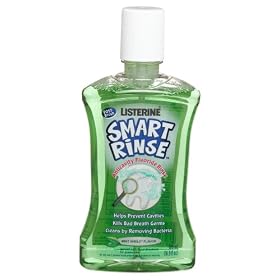 ket that would not normally desire these products. True innovation, to me, is creating an entirely unique product or service that a consumer did not even realize that they wanted, but upon seeing the product, has to have. Normally, a child might not even look around and browse if they were going on a shopping trip with their parents. But when a company takes the time to study a developing market and create products that are fun and exciting for kids, they develop a new set of consumers. They have reached out to children and turned them into the consumers, allowing them to form their own desires and opinions.
According to “Consumer Behavior, A Marketing Strategy,” Eighth Edition, by J. Paul Peter and Jerry C. Olson, It’s proven that the customers who do the most pre-purchase research are commonly characterized as those who have easy access to information, and those who are buying products for others. Often, the most trusted pre-purchase information comes from reviews from friends, relatives, and other consumers who review the products you’re researching. These are good sources because there is low effort involved with attaining this information and the information comes from highly believable sources.
This idea of word-of-mouth information spread ties into the article, “The New, Faster Face of Innovation," because it is an example one of the most prevalent examples of how technology is streamlining innovation. Parents can post their opinions and product reviews on blogs or social media sites and almost instantaneously affect someone’s perception of a product. These perceptions can be either good or bad, and can have a direct influence on a marketing campaign. Like the article by Brynjolfsson and Schrage says, “Companies are able to get a much better idea of how their customers behave and what they want,” in a cost-efficient and speedy way. Parents need to take advantage of this situation and help marketers know what their children might enjoy and be willing to try. The recent changes in innovation processes ultimately benefit both the consumer and the manufacturers, and these two groups should work together to continuously improve and develop products and services.
Monday, September 28, 2009
The Effect of Expectations
The primary lesson from “Predictably Irrational” by Dan Ariely is that expectations about a product or experience can have a greater impact on consumer satisfaction than the product or experience themselves. Consumers form expectations that can overcome reality when they receive information about a product before they test it. These expectations can be based on product reviews, appearances, and descriptions, as long as they are introduced before the consumer experiences the product.
Understanding how consumers form expectations can be a key insight into creating products for our customers. Whether you’re designing the packaging or writing the product descriptions, it is important to make the product look and sound appealing in order to influence their purchase decision and their evaluation of the product.
For example, I begin enjoying any Apple brand product before I even finish opening the package. All of their products are well designed, easy to open, and packed very efficiently. The packaging indicates to me that I bought a valuable product and will be satisfied with my purchase. Before I even use the product, Apple has created a valuable experience.
The main example that Ariely provides in his explanation is how consumers are influenced by the knowledge that vinegar has been added into beer during a taste-test. Without knowing about the vinegar, most of the test subjects prefer the altered beer. However, if they hear the description before they taste the altered beer and regular beer, they will be much more likely to choose the regular beer because they form an expectation that overrides their experience.
This test could also be performed to compare generic products to brand-name products. You could have a group that participated in a blind comparison and judged which product was more effective, and another group who is told which one is the gen eric product before they judge which product was more effective. Customers might prefer paying a premium price for a brand name product because it has fancier packaging or they have brand loyalty. This test would be effective at testing the strength of consumers biases for certain product categories and the impact of product packaging.
As we discussed “True Colors” by Malcolm Gladwell in class, it was mentioned that some products, like at home hair color, are worth paying a premium for because they have a permanent effect on your daily appearance and self-esteem. However, products like over-the-counter medicine and basic beauty products are typically made from the same formula and ingredients, and medicines have to pass the same standards set by the FDA as name-brand products. So unless you’re planning on testing a product like hair color that could have a long-term effect, this experiment could produce very interesting results. I would assume that the knowledge of the generic brand might have the “vinegar effect” seen in Ariely’s beer test.
Understanding how consumers form expectations can be a key insight into creating products for our customers. Whether you’re designing the packaging or writing the product descriptions, it is important to make the product look and sound appealing in order to influence their purchase decision and their evaluation of the product.
For example, I begin enjoying any Apple brand product before I even finish opening the package. All of their products are well designed, easy to open, and packed very efficiently. The packaging indicates to me that I bought a valuable product and will be satisfied with my purchase. Before I even use the product, Apple has created a valuable experience.
The main example that Ariely provides in his explanation is how consumers are influenced by the knowledge that vinegar has been added into beer during a taste-test. Without knowing about the vinegar, most of the test subjects prefer the altered beer. However, if they hear the description before they taste the altered beer and regular beer, they will be much more likely to choose the regular beer because they form an expectation that overrides their experience.
This test could also be performed to compare generic products to brand-name products. You could have a group that participated in a blind comparison and judged which product was more effective, and another group who is told which one is the gen
eric product before they judge which product was more effective. Customers might prefer paying a premium price for a brand name product because it has fancier packaging or they have brand loyalty. This test would be effective at testing the strength of consumers biases for certain product categories and the impact of product packaging.As we discussed “True Colors” by Malcolm Gladwell in class, it was mentioned that some products, like at home hair color, are worth paying a premium for because they have a permanent effect on your daily appearance and self-esteem. However, products like over-the-counter medicine and basic beauty products are typically made from the same formula and ingredients, and medicines have to pass the same standards set by the FDA as name-brand products. So unless you’re planning on testing a product like hair color that could have a long-term effect, this experiment could produce very interesting results. I would assume that the knowledge of the generic brand might have the “vinegar effect” seen in Ariely’s beer test.
Tuesday, September 8, 2009
My Top 10 List for Marketers:

1. Splurge for Products that Simplify
While living away from my parents for the past few years, I’ve developed my own routines for cooking and cleaning. For instance, unlike my parents, I am willing to pay more for items like Swiffer brand disposable cleaning products than investing in a reusable mop and broom. Disposable products are convenient because they are easier to use and don’t require any post-clean-up time.
2. Multi-Tasking is the Key
Throughout the day, I constantly find myself multi-tasking. Whether it’s walking to class and talking on the phone/checking emails or watching TV/listening to music while I’m doing homework at night, I’m always splitting my concentration between multiple tasks. For this reason, products like the iPhone appeal to me because they make multi-tasking easy and enjoyable.
 3. Packaging is Important
Whether it makes a product easy to use, like stay-fresh containers, or is just appealing, like all Apple products, packaging is definitely important. I’m attracted to products with packaging that is both functional and easy on the eyes. Packaging should be descriptive without being overwhelming, and should give you a clear picture of what is inside the box.
4. One-Stop Shopping
Rather than going to both a grocery store and a store, I would much rather go to a super-store where I can get everything I need at one place. I am even willing to pay more for products in exchange for the convenience of buying everything in one location.
5. Clutter-Free Store Layouts
I enjoy shopping at stores that are organized and shopper-friendly. I notice that I’ll spend more time in stores that have wider aisles and thoughtful layouts than in stores with cluttered aisles. For instance, I would much rather go to Target than Wal-Mart, because I feel like Target stores have less commotion and have a more welcoming design.
6. Online Shopping
I am an avid online shopper. Whether I’m buying clothes, electronics, or household items, I enjoy shopping online because I appreciate being able to see more of a selection than usually found in a store. I’m also the type to fall for promotions like free shipping once you spend a certain amount.

7. Generic Products
Even though I am willing to spend more money for convenience, I am always looking for great deals and ways to save money. That is why I am always more apt to buy a generic product than a name brand. Target does a great job of promoting their generic brand, Up&Up, by placing similar products right next to the name brand product, and in familiar packaging.
8. Coupons
Speaking of saving money, I am also the type to collect and use coupons I receive. For example, I’ve recently begun receiving coupons at Target that are printed with my receipt. These seem to be targeted coupons, offering discounts for the generic version of items that I’ve recently purchased.
9. Online Advertisements vs. TV Advertisements
Since the invention of TIVO, I seldom watch commercials on TV. I see more advertisements on social websites or while watching TV shows online.
 10. Trying New Products
I’m more willing to try a new product if it is offered free for a limited time with a more familiar product or if I can go online to print off a coupon. Since you are taking a chance when buying a new product, discounts and promotions eliminate some of the risk.
Subscribe to:
Posts (Atom)